Best Car Insurance Discounts for Safe Drivers in 2026

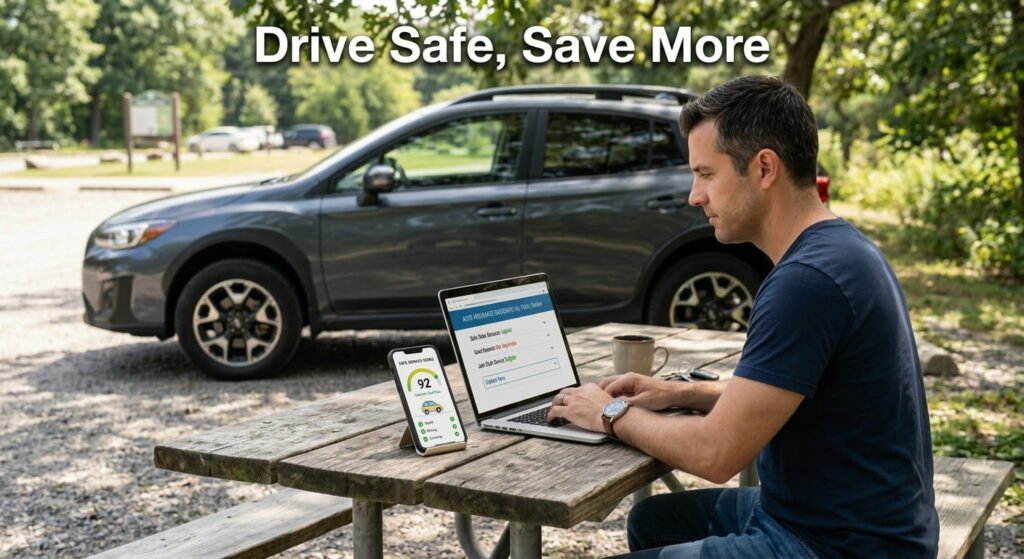
A clean driving record may do more than spare you the cost of a ticket or repair. It can help you qualify for a lower auto insurance premium—but the reward may take several forms. One insurer might offer a discount for years without an accident; another might use an optional app to assess how you drive. A third might offer a separate benefit if you drive fewer miles.
Finding the best car insurance discounts for safe drivers in 2026 means understanding those differences before you enroll or compare prices. Good-driver and accident-free discounts, telematics programs, approved driving courses, and low-mileage options have different eligibility rules. A strong driving record alone does not guarantee a specific discount or the lowest overall quote.
This guide explains the major discount types, compares current insurer programs, and shows how to check the fine print behind advertised savings. Availability, amounts, data practices, and renewal pricing vary by state, insurer, policy, and driving history. The useful number is the final premium for comparable coverage—not the largest percentage in an advertisement.
Understanding safe-driver savings
What is a safe-driver discount?
A safe-driver discount, sometimes called a good-driver discount, is a premium reduction for meeting an insurer’s driving-history criteria. A company may consider at-fault accidents, moving violations, speeding tickets, serious offenses, relevant claims, and how long the record has remained clear. Those criteria and qualifying periods are not uniform. Travelers, for instance, says its Safe Driver Discount considers factors including at-fault accidents, major comprehensive claims, and license points from moving violations; it is unavailable in California and New York.
A discount is also different from the overall way an insurer prices risk. An accident-free driver might receive an identifiable discount and a base rate influenced by location, vehicle, mileage, coverage, and other permitted factors. Another insurer may account for driving history primarily in its rating calculation rather than displaying an identically named discount.
Ask the insurer what period it reviews, whether an incident or claim affects eligibility, which vehicles or drivers receive the reduction, and when the policy will be checked again. Even if you qualify, a competitor may still quote a lower total premium for the same protection.
Main types of safe-driver benefits
“Safe-driver savings” is an umbrella term. It helps to separate an actual discount from a personalized rate or a feature that affects pricing after an accident:
- Good-driver or accident-free discounts reward a qualifying driving history. A claim-free discount may use a different test from one focused on at-fault crashes.
- Usage-based or telematics programs use driving or mileage data to calculate a discount or personalized renewal price. Riskier driving can affect the outcome in some programs.
- Defensive driving course discounts may apply after an approved course, subject to age, state, insurer, and documentation rules.
- Low-mileage discounts or mileage-based policies recognize less driving, sometimes through an app or device. Mileage-based pricing is not necessarily the same as a safe-driving score.
- Young-driver training benefits may reward completion of a qualifying program rather than years of claim-free driving.
- Accident forgiveness can limit a qualifying accident’s effect on a rate under specified terms. It is not the same as a discount on every current premium or a promise that the total bill cannot change.
These benefits may overlap, but their rules differ. Ask for a quote showing what is applied now and what could change at renewal.
Insurer programs in 2026
Best car insurance discounts for safe drivers in 2026: Programs to compare
The companies below illustrate different approaches; the table is not a ranking. Figures are the insurers’ own advertised amounts, not independently verified savings you should expect to receive. Program terms and state eligibility can change, so confirm them on your quote and policy.
| Insurance company | Discount or program | How drivers may qualify | Advertised savings, if verified | Important restrictions |
|---|---|---|---|---|
| State Farm | Drive Safe & Save; applicable driving-record savings | Enroll in the app-based program; renewal adjustments consider mileage and driving characteristics | Up to 30% for Drive Safe & Save; State Farm says discounts may exceed that in some states | Not available in CA, MA, or RI; NY capped at 30%; individual eligibility and results vary. statefarm |
| Progressive | Three-year safe-driver, five-year accident-free or claim-free discounts; Snapshot | Meet each record-based test, or enroll for a driving-data-based rate | Snapshot says participating new customers get an average $164 initial discount; customers who earn a discount at completion save $328 annually on average | Initial incentive expires; a high-risk Snapshot result can increase rates. The $328 applies to customers who earned a discount, not all participants. |
| Allstate | Drivewise; other eligible safe-driving savings | Enroll qualifying policy drivers and meet trip requirements for a driving-based renewal result | No single nationwide amount stated here | Data use and savings vary by state; the company says a qualifying driver generally needs 50 trips in a driving period for a renewal discount. |
| USAA | SafePilot | Hold an eligible USAA auto policy and participate in the safe-driving program | USAA’s July 2026 announcement says a new participant can earn up to 15% for opting in; its program advertises up to 30% at renewal for qualifying safe driving | Restricted to eligible USAA members; enrollment, state availability, and actual savings vary. |
| Travelers | Safe Driver Discount; IntelliDrive or IntelliDrive 365 | Meet driving-record criteria, or enroll in the available driving-data program | IntelliDrive advertises up to 30% for safer driving; IntelliDrive 365 advertises up to 35% at renewal | Record-based discount unavailable in CA and NY; telematics program, maximum, and rate-increase rules vary by state. |
| The Hartford | Clean-record discount; TrueLane | Qualify with a five-year clean history or enroll in TrueLane under program rules | Up to 10% for the stated clean-history test; TrueLane up to 15% at enrollment and up to 40% at renewal | Auto program is offered through its AARP arrangement; check membership, state, enrollment, and driving-data terms. |
State Farm uses Drive Safe & Save to update a premium adjustment at renewal based on recorded driving characteristics and mileage. Its advertised “up to” figure is not a promise to every enrollee, and the exclusions listed above make a state check essential. Request a separate explanation of any traditional good-driver discount on your quote rather than assuming the app replaces it.statefarm
Progressive offers several distinct rewards. Its three-year safe-driver and five-year accident- or claim-free discounts rely on driving history; Snapshot instead uses driving data. The Snapshot figures in the table measure different things—an initial average incentive and an average annual saving among customers who earned a discount at completion. They should not be added together or compared directly with another company’s maximum.
Allstate’s Drivewise considers information such as speed, braking, driving time, and phone activity. Its published questions and answers describe trip thresholds and explain that terms and pricing effects differ by state. Ask which household drivers must participate and how an incomplete set of trips affects your discount.
USAA is an option only for eligible members. Its July 2026 announcement reports a higher potential opt-in discount for new SafePilot participants, while its SafePilot page describes a potential safe-driving discount at renewal. Confirm the version and terms offered in your state.
Travelers distinguishes its traditional Safe Driver Discount from IntelliDrive telematics. Its IntelliDrive and IntelliDrive 365 versions have different availability and maximums, and riskier driving may raise premiums under applicable program terms. The Hartford similarly separates a five-year clean-record discount from TrueLane’s participation and earned renewal incentives.
Good-driver vs. accident-free discounts
A good-driver discount may look broadly at a qualifying period without specified violations or at-fault accidents. An accident-free discount focuses on the absence of accidents meeting an insurer’s criteria. A claim-free discount can be a separate category again. Progressive explicitly lists five-year accident-free and five-year claim-free discounts, while Travelers describes several factors for its Safe Driver Discount.
Consider two illustrative drivers who meet an insurer’s other requirements. Driver A has no accidents or moving violations during the review period. Driver B has no at-fault accidents but received a speeding ticket. Both might meet an accident-focused test, while only A might meet a good-driver test that also excludes moving violations. The actual result depends entirely on that insurer’s definitions and state rules.
If a quote says “safe driver,” ask which test you passed. A discount name alone does not tell you whether a past comprehensive claim, ticket, or not-at-fault crash affects eligibility.
Telematics and usage-based pricing
A telematics program uses an app, plug-in device, or connected-vehicle data to assess driving. Depending on the product, it might consider speeding patterns, hard braking, rapid acceleration, phone handling, time of day, trip frequency, or mileage. Different companies use different measures and scoring methods. Allstate’s Drivewise identifies speed, braking, nighttime driving, and phone use; State Farm considers driving characteristics and mileage in Drive Safe & Save.
A consistently cautious driver might earn savings, but enrollment is not a guarantee of a lower renewal bill. Progressive says high-risk driving can produce a higher rate with Snapshot; Travelers says riskier driving can increase premiums under applicable IntelliDrive terms. The outcome may depend on other participating drivers and whether the program receives enough usable trips.
Read the program terms before opting in. Ask what data is collected, how trips are attributed to drivers, whether all household drivers must join, how long information is used, and what happens if you stop participating. Consider privacy and your actual driving pattern: someone who must regularly drive late at night, for instance, should understand whether and how the program scores those trips.
Other ways safe drivers save
Defensive driving courses
An approved defensive driving course may earn a discount in some states and policies. The Hartford, for example, publishes a course-related discount under its AARP auto program and identifies the AARP Driver Safety Course as an example of an approved option. Course eligibility, documentation, discount duration, and the drivers who can qualify vary; a course you choose independently is not automatically accepted.
Before paying a course fee, ask your insurer which classroom or online providers it approves, whether your age or prior violations affect eligibility, and when the saving would begin. Compare the course cost with the actual quoted discount, not an advertised maximum from another company. A course may offer useful driving instruction even if your policy does not award a discount, but you should know that distinction before enrolling.
Low-mileage options
If you drive relatively little—perhaps because you work remotely, have retired, or use a second household car infrequently—ask about a traditional low-mileage discount. Some insurers instead offer a mileage-based policy with a flexible bill. Nationwide describes SmartMiles as a program with a monthly rate that depends in part on miles driven; USAA offers SafePilot Miles to eligible members, with program requirements and potential safe-driving components.
Do not confuse a verified mileage discount with a telematics discount earned by braking, speed, or phone behavior. A program may use both types of information, and thresholds or verification rules differ. Report your mileage accurately and ask how a change in commuting would affect the price. If your monthly mileage varies sharply, compare an estimated annual total with a conventional policy before switching.
Interpreting advertised savings
An “up to” percentage is a maximum under stated conditions, not an average. The Hartford advertises up to 15% for qualifying TrueLane participation and up to 40% at renewal based on driving. Those are different stages of one program, not two percentages to add together. Travelers’ IntelliDrive programs likewise publish differing maximums and state rules.
An average needs its population explained. Progressive’s published $328 annual Snapshot figure applies to customers who renewed and earned a discount, not to everyone who enrolled. State Farm’s Drive Safe & Save maximum varies by state, with specific exclusions and a New York cap.
Discounts may apply to different portions of a policy’s premium or interact with other discounts and rating changes. Therefore, a company advertising a larger potential percentage can still give you a higher final quote. Request the premium for identical coverage with and without an optional program, and ask how the result might change at renewal.
Premium factors beyond driving
A clean record is valuable, but it is not your entire insurance profile. Depending on state law and insurer rules, pricing may consider your garaging location, vehicle model and repair cost, annual mileage, coverage limits, deductibles, insurance and claims history, and other permitted driver characteristics. The company’s own pricing can also produce different quotes for the same driver.
For example, two drivers with no tickets may pay different premiums if one insures a high-value vehicle with low deductibles and the other insures a less expensive car with higher deductibles. A good-driver discount reduces a qualifying premium under its rules; it does not make these otherwise different policies identical.
Compare the protection along with the price. Reducing liability limits or raising a deductible beyond your available savings is not the same as earning a discount for safe driving.
Making discounts work
How to qualify for more discounts
You cannot control every pricing factor, but you can make sure eligible savings are considered:
- Keep an accurate driving record and follow speed limits and traffic laws; avoid distracted driving.
- Ask specifically about good-driver, accident-free, and claim-free tests—not just “discounts.”
- Verify that a proposed defensive driving course qualifies before paying for it.
- Consider telematics only after reviewing its data, participation, and renewal-pricing rules.
- Give an accurate annual mileage estimate and ask about low-mileage options.
- Check multi-car and bundling prices as separate opportunities; compare the combined total.
- Request a discount review at renewal and compare quotes with equivalent limits and deductibles.
Keep vehicle, driver, and garaging information accurate. If your commute disappears or a household driver changes, notify the insurer and request an updated quote. A discount may be available without buying new coverage—but you should not change important protection solely to make the premium look lower.
Common discount mistakes to avoid
Do not assume every insurer defines “safe driver” the same way or uses the same qualifying period. Avoid treating an advertised maximum as your likely saving, and do not add an enrollment incentive to a renewal maximum as though both apply simultaneously. Check state availability: Travelers’ record-based discount, for example, is not available in California or New York, and State Farm’s Drive Safe & Save has its own state exclusions.
Read telematics terms before sharing driving data; some programs can lead to a higher personalized rate. Verify course approval and discount duration before paying for training. At renewal, check whether your discounts remain on the declarations page. Report mileage and driver information honestly, and compare final quotes without cutting necessary coverage merely to obtain a lower payment.
Frequently asked questions
What is the best car insurance discount for safe drivers?
There is no universal winner. A long clean record might qualify you for a traditional good-driver or accident-free discount, while low mileage or an optional telematics program may offer a separate opportunity. Compare eligibility, privacy terms, and the final premium for the same coverage—not just advertised potential savings.
How many accident-free years do I need?
It depends on the insurer and the particular discount. Progressive lists a five-year accident-free discount and a separate three-year safe-driver discount; The Hartford describes a clean-history discount based on five years under its stated criteria. Ask how your insurer counts accidents, violations, claims, and the qualifying period.
Do safe-driver discounts lower monthly payments?
A qualifying discount can reduce the policy premium, which may reduce installment payments if the discount is reflected in the billed amount. Monthly charges can also depend on payment fees, billing schedule, and other policy changes. Check the revised declarations page and payment schedule to see the actual effect.
Can a telematics app lower my premium?
Yes, it may reward qualifying driving behavior or mileage. But participation conditions and outcomes differ by program: an initial discount may expire, a later saving must be earned, and some programs permit higher rates for riskier driving. Review the data rules and compare your personalized renewal quote.
Are safe-driver discounts available in every state?
No single discount or program is available everywhere. State rules and insurer offerings differ. State Farm lists states where Drive Safe & Save is unavailable, while Travelers excludes California and New York from its Safe Driver Discount and lists separate availability for its IntelliDrive programs. Confirm eligibility using your garaging state.
Can I combine safe-driver and other discounts?
Potentially. You may qualify for more than one driving-related or household discount, but each insurer controls eligibility and how savings interact under applicable state rules. Percentages generally should not be added together to estimate a final premium. Request a written quote showing each applied discount and the total price.
How do I find out what I qualify for?
Ask your current insurer or agent to review your driving record, mileage, vehicles, and household details against its available discounts. Check which savings are already applied, what evidence is needed, and when eligibility is reevaluated. Then obtain competing quotes with matching coverage limits and deductibles.
Conclusion
The best car insurance discounts for safe drivers in 2026 may come from a clean record, an accident-free period, an approved course, low mileage, or an optional driving-data program. Each works differently, and an advertised maximum does not tell you what your final premium will be. Program eligibility, state restrictions, and renewal rules deserve as much attention as the initial incentive.
Contact your insurer for a discount review, check the telematics terms before enrolling, and compare several quotes using identical coverage and deductibles. Do that before renewal so you can choose savings without giving up protection you need.