Best Car Insurance for Used Cars: A Complete Guide (2026)

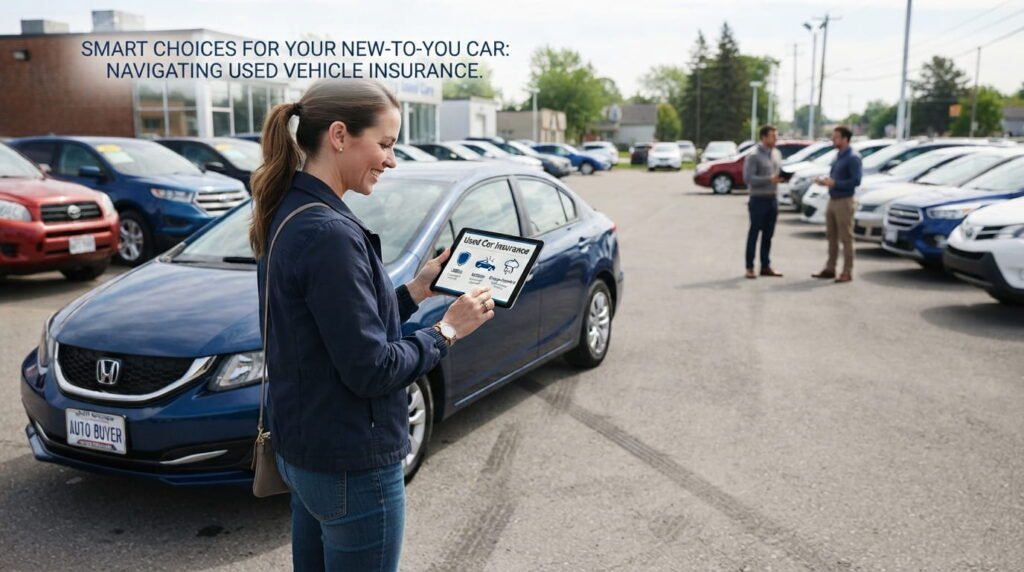
Buying a used car can lower the purchase price, but it does not make insurance a one-size-fits-all decision. A three-year-old financed SUV, a ten-year-old family sedan, and a low-value commuter car present different repair costs and financial risks. Paying for coverage you would not use can strain your budget; skipping protection you need can leave you paying for a loss yourself.
There is no separate insurance product exclusively for used cars. You choose from standard auto coverages, subject to state rules, policy terms, and any loan or lease agreement. The central questions are what the vehicle is worth today, how much a covered claim might pay after a deductible, and whether you could repair or replace the car without that payment.
This guide to finding the best car insurance for used cars compares insurers worth researching, explains liability and vehicle-damage coverage, and shows how to obtain useful quotes before a purchase. No company or coverage package is automatically right for every used-car owner; your location, driving record, car, finances, and coverage choices determine the better fit.
Understanding used car coverage
What is used car insurance?
Used car insurance is an ordinary auto policy covering an eligible previously owned vehicle. Like insurance for a new car, it can include liability for covered harm you cause others, collision for covered crash damage to your car, comprehensive for specified non-collision losses, and other protections you choose or your state requires. Vehicle age alone does not determine the coverage you can buy or the premium you will pay.
Age can matter indirectly. An older car may have a lower current market value, potentially reducing the insurer’s exposure under collision or comprehensive. Yet replacement parts, specialized repairs, theft experience, or claim patterns for its particular model can complicate that assumption. Your ZIP code, annual mileage, driving and claims history, limits, deductibles, and insurer also affect the quote.
Consider two used cars bought for similar prices: one has inexpensive, widely available parts; the other needs costly specialized repairs. Their insurance premiums need not match. Similarly, insuring a high-mileage car for liability only is not directly comparable to protecting the same car against collisions and theft. Request a quote for the exact vehicle identification number (VIN) when possible, then review the actual coverage offered.
Types of coverage for used cars
Liability coverage addresses eligible bodily injury and property damage you cause to other people, up to your policy limits. Bodily injury liability can apply to another person’s injuries; property damage liability can apply to their car, fence, or other property. It generally does not pay to repair your own car after an at-fault crash. Most states require some form of insurance or financial responsibility, but the required limits and additional coverages differ.
Collision coverage helps pay for eligible damage to your insured car after a collision with another vehicle or object. Comprehensive coverage addresses specified non-collision losses, potentially including theft, fire, hail, vandalism, falling objects, and animal strikes. Both generally have a deductible—the portion of an eligible claim assigned to you. For an older car, compare the extra premium and deductible with the vehicle’s current value.
Uninsured or underinsured motorist coverage may help with qualifying losses involving another driver who has no insurance or insufficient limits. What it covers, whether it is required, and its available limits depend on the state and policy. Personal injury protection (PIP) or medical payments coverage may help with eligible medical expenses; these also differ by jurisdiction.
Rental reimbursement can help pay for temporary transportation after a qualifying covered loss, subject to policy limits. Roadside assistance may help with services such as towing or a lockout. They are generally optional and can have separate costs and restrictions. If you rely on an older used car for daily transportation, these options may be worth pricing rather than assuming they are included.
State-required coverages are a legal obligation. Collision and comprehensive generally are not required by state law, but a lender or lessor commonly requires them for a financed or leased used car. Optional benefits should be judged on their actual terms, not a package name such as “full coverage.”
Liability vs. full coverage for used cars
“Full coverage” is an informal term usually referring to liability plus collision and comprehensive—not a standardized policy covering every loss. Compare the actual declarations page, which lists your limits and deductibles. You can also choose liability limits higher than your state’s minimum without buying collision or comprehensive.
| Question | Liability-only policy | Policy commonly called “full coverage” |
|---|---|---|
| What does it generally protect? | Eligible injuries and property damage you cause to others, within liability limits | Liability protection plus eligible collision and specified non-collision damage to your car |
| Does it repair your car after an at-fault crash? | Generally no | Collision may apply, less its deductible |
| Does it address theft or hail damage to your car? | Generally no | Comprehensive may apply, less its deductible |
| Typical cost consideration | Generally lower premium for otherwise comparable limits | Generally higher premium; adds vehicle-damage protection |
| Who might consider it? | Owner of an eligible paid-off car who could fund repairs or replacement | Owner of a higher-value car, someone who could not absorb a loss, or a driver subject to lender requirements |
| Main financial risk | You may need to replace your own damaged or stolen car without an insurance payment | Deductibles, exclusions, valuation rules, and limits still leave potential costs |
The table describes common arrangements, not a recommendation to drop coverage on an older car. A paid-off vehicle may be essential to your work and expensive for you to replace. Conversely, paying for collision on a low-value car may provide a limited potential payout after the deductible. Your budget, risk exposure, and any financing contract should determine what you investigate next.
Insurers and prices
Best car insurance companies for used cars to compare
These major companies offer standard auto insurance, including liability and optional vehicle-damage coverage. They are quote candidates, not a ranking: none is universally the cheapest insurer for used cars. Use the same limits, deductibles, drivers, and vehicle details when comparing them, and verify options in your state.
| Insurer | Options and potential savings to examine | Online and claims resources | What to verify |
|---|---|---|---|
| GEICO | Liability, collision, comprehensive; eligible multi-car, multi-policy, and DriveEasy savings | Online quotes, app and claims tools | Final deductible, discount eligibility, and optional roadside or rental cost |
| State Farm | Core coverages; rental and emergency road service options; Drive Safe & Save | Agent support, online account, app-based claims | State program terms and the price of each add-on |
| Progressive | Core coverages; rental, roadside, and Snapshot | Online quoting and claims reporting | Whether driving data can affect renewal prices and how optional limits work |
| Allstate | Core coverages; roadside choices and Drivewise | Digital policy and driving-program tools | Program availability, coverage terms, and final quoted premium |
| Nationwide | Core coverages; roadside, SmartRide, and eligible SmartMiles options | App for policy changes and filing or tracking claims | Low-mileage eligibility, vehicle compatibility, and state availability |
| USAA | Core coverages; rental and roadside options; SafePilot | Website and app for policy management and claims | Restricted membership eligibility and state-specific program terms |
GEICO is a practical quote to gather when you want to test multi-car or multi-policy pricing. Its DriveEasy program is a separate decision: read the app’s data and pricing terms rather than assuming enrollment guarantees savings. Check the cost of rental reimbursement or emergency roadside service if those matter to you.
State Farm may appeal if you want an agent to walk through whether physical-damage coverage still suits an older vehicle. Its online account and app also support policy and claim tasks. Drive Safe & Save is available only under its program and state rules, so compare a written quote with the coverage choices you actually want.
Progressive lets you price coverage and options such as roadside assistance or rental reimbursement. Its Snapshot program uses driving data to personalize rates; in some circumstances the resulting rate can increase. For an older car, check whether the add-on’s cost and limits justify it.
Allstate offers standard policy choices and a Drivewise program for eligible drivers. Ask whether the particular policy includes the vehicle and optional services as quoted. Nationwide is worth investigating for a low-mileage used car, but its SmartMiles program is not suitable for every vehicle or driver; compare its total expected cost with a traditional policy.
USAA is relevant only if you meet its membership rules, which generally center on military service and qualifying family relationships. Its coverage and safe-driving programs are worth comparing if eligible. Across all six insurers, digital conveniences are useful, but they are not proof of a better claims outcome or a lower price for your used car.
How much does used car insurance cost?
There is no reliable single national “used car insurance” price: studies combine different model years, drivers, states, coverage levels, and vehicles. A published average for all cars does not establish the rate for a particular used Toyota, pickup, or older luxury car. Even two drivers insuring the same used vehicle can receive different prices because of location, record, mileage, deductible, and insurer.
For scale—not as a used-car-specific estimate—Insurance.com’s 2026 national rate analysis reports $738 annually for state-minimum coverage and $2,578 for full coverage. Its core profile is a 40-year-old driver with good credit and a clean record, driving a Honda Accord LX 10,000 miles a year. The full-coverage example has 100/300/100 liability limits and $500 collision and comprehensive deductibles. Minimum coverage is based on each state’s requirements, so the figures also reflect different liability protection; their difference is not simply the price of adding collision and comprehensive.insurance
Used car insurance cost can be lower for some older, lower-value vehicles when physical-damage coverage is selected, but not every older car is cheaper to insure. Liability costs remain, and repair expense or theft patterns may complicate the result.
For a meaningful answer, obtain quotes for your exact VIN at two or more coverage levels while holding liability limits constant. Ask for both the total annual premium and a separate price for collision and comprehensive. That isolates the decision you can actually make.
Choosing coverage and savings
How to choose the right coverage
Start with the used car’s current market value, not what its first owner paid or what you paid several years ago. Collision or comprehensive payments after a covered total loss may be tied to the vehicle’s pre-loss value, minus an applicable deductible under policy terms. If the car has depreciated considerably, its maximum practical physical-damage benefit may be modest compared with the additional premium.
Next, assess your ability to absorb a loss. Could you pay for a substantial repair—or replace the car and maintain transportation—without emptying emergency savings or taking on unaffordable debt? A household that relies on one car may value physical-damage protection differently from one with another vehicle available.
Check financial obligations separately. If the car is financed or leased, inspect the agreement for collision, comprehensive, and deductible requirements. Compare any outstanding balance with the vehicle’s value, especially if you financed much of its purchase price. A standard total-loss payment is not automatically the amount needed to pay off the loan.
Consider the risks around you: weather, theft, parking arrangements, and how often you drive. Comprehensive can address specified non-collision losses, while collision addresses covered crash damage. Keep liability limits under review regardless of whether you insure your own car against damage; state minimums do not guarantee that every serious claim will remain within them.
Finally, request deductible options you could afford immediately after a covered claim. The right choice balances premium with potential out-of-pocket expense. There is no universal vehicle age or dollar-value threshold for dropping coverage.
How to save money on used car insurance
Look for affordable coverage, not merely the lowest monthly payment. A quote with weaker liability limits or an unaffordable deductible may transfer more risk to you than you intended.
- Compare multiple insurers. Enter identical drivers, VIN, garaging address, mileage, liability limits, and policy periods.
- Match deductibles. Compare collision and comprehensive with the same deductibles first; then ask for separate prices at other amounts.
- Request a discount review. Ask about good-driver, multi-policy, multi-car, eligible low-mileage, and other used car insurance discounts. Actual eligibility and savings vary by insurer and state.
- Explore usage-based programs carefully. Read what driving or mileage data is collected and whether it can change renewal pricing. A program that fits an occasional driver may not fit a household using the car daily.
- Choose an affordable deductible. Raising it can reduce a physical-damage premium, but only if you could pay the extra amount after a loss.
- Check optional benefits for duplication. You may not need to buy roadside coverage through an insurer if you already have a suitable service elsewhere; compare actual terms before removing it.
- Maintain accurate information. Report who drives the car, where it is kept, its mileage, and any change in use. Keep a clean driving record where possible.
- Compare payment totals. An installment plan can carry fees. Ask for the six- or twelve-month total alongside the monthly schedule.
- Review at renewal. A decline in the car’s value or a change in your savings may alter the case for collision and comprehensive.
Do not automatically reduce liability limits to offset a higher premium. If you need to cut costs, ask for the price of several carefully defined coverage combinations and consider what you would owe after a serious loss.
Financed and older used cars
A lender or lessor commonly requires collision and comprehensive on a financed used car, because damage or theft could affect its collateral. The contract may also address deductibles. Do not remove required physical-damage coverage merely because the car is older or you have paid down part of the loan.
If a covered total loss produces a settlement below what you owe, gap coverage, where available and applicable, may address an eligible portion of that shortfall. It has exclusions and limits, so check whether it is offered for your vehicle and financing arrangement. Do not assume a standard collision policy pays your remaining loan balance.
For an older, paid-off car, calculate the additional annual premium for collision and comprehensive separately. Compare it with the car’s value and potential payout after each deductible, then ask whether you could handle a repair or replacement without the coverage. Comprehensive may still appeal to someone concerned about theft or weather even if they decide collision is not worthwhile. Vehicle age is a prompt to review, not an instruction to drop both.naic
Buying and reviewing a policy
How to insure a used car before purchase
Arrange insurance before you drive the car home; do not treat a seller’s policy or a vague “grace period” as your protection. An existing policy may provide temporary coverage for a qualifying newly acquired vehicle, but conditions, notification deadlines, and the type of coverage can differ. Confirm directly with your insurer.
- Get the VIN. Ask the seller or dealer for the exact vehicle identification number, model year, trim, and mileage.
- Request quotes before purchase. Price the actual vehicle with several insurers, including the limits and deductibles you are considering.
- Check requirements. Verify your state’s insurance rules and any lender or lease conditions.
- Confirm the effective date and time. Ask whether your existing policy extends coverage to this vehicle or whether a new policy or endorsement must begin first.
- Obtain proof of insurance. Keep the insurance card or accepted digital proof and the insurer’s contact details accessible.
- Review the issued policy. Make sure the VIN, drivers, coverages, deductibles, and effective dates match your request.
This sequence also helps you avoid buying a car whose insurance cost changes the ownership budget unexpectedly.
Common mistakes to avoid
Shopping on price alone can hide lower liability limits, a larger deductible, or missing vehicle-damage coverage. Compare like-for-like quotes and the total policy-period cost. Do not assume the state minimum would cover every claim you might cause.
If the used car is financed, read the contract before removing collision or comprehensive. Choose deductibles from accessible savings, not solely from the premium difference. Review exclusions, rental limits, and total-loss valuation rules; “full coverage” does not override them.
Finally, update driver, garaging, vehicle, and mileage information accurately. Discounts and digital features differ among insurers, and a saving advertised by one company may not apply in your state. Recheck the declarations page after a vehicle purchase or policy change, and ask the insurer to correct anything that does not match what you requested.
Frequently asked questions
What is the best car insurance for used cars?
The best car insurance for used cars is a policy that meets state and any lender requirements, offers liability limits suited to your finances, and prices useful vehicle-damage coverage affordably. Compare personalized quotes from several eligible insurers. No company has the lowest price or most suitable terms for every used car and driver.
Is insurance cheaper for a used car than a new car?
It can be, particularly if the used car has a lower value and you select collision or comprehensive coverage. It is not guaranteed. Repair costs, model-specific claims, theft patterns, location, driver history, limits, and insurer pricing also matter. Quote the exact used and new vehicles under identical coverage assumptions.
Do older cars need full coverage?
Not automatically. “Full coverage” commonly means liability, collision, and comprehensive, but the label does not establish what you need. If a lender requires physical-damage coverage, follow the contract. Otherwise, compare the older car’s value, premiums, deductibles, and your ability to repair or replace it yourself.
Can I get liability-only insurance for a used car?
Often, if the car is owned outright and the policy still meets your state’s requirements. Liability generally helps pay eligible harm you cause others, not repairs to your own car after an at-fault crash or a theft. Check any financing agreement before declining collision and comprehensive.
Is insurance required before driving a used car home?
You must meet applicable state insurance or financial-responsibility rules before driving. Do not assume a seller’s insurance covers you or that your existing policy automatically provides every coverage you want. Confirm the used car’s coverage and effective date with your insurer, and arrange proof of insurance as required.
Should I keep collision and comprehensive on an older car?
Price them separately. Compare each additional premium and deductible with the vehicle’s current value, likely covered-claim payment, and your emergency savings. Collision and comprehensive protect against different losses, so keeping one and dropping the other can be worth evaluating. Confirm there is no lender requirement first.
Does financing a used car affect insurance requirements?
Usually, yes. A lender commonly requires collision and comprehensive while you owe money on the vehicle and may specify deductible conditions. State insurance minimums and lender requirements are different. Ask whether eligible gap coverage would be relevant if the loan balance could exceed the vehicle’s covered total-loss value.
How can I get cheaper used car insurance?
Compare quotes with the same limits and deductibles, ask about discounts you qualify for, and review optional benefits. Test a higher deductible only if you could pay it after a loss. Reassess physical-damage coverage as the car’s value changes, but do not reduce important liability protection without understanding the risk.
Conclusion
The best car insurance for used cars depends on more than the vehicle’s age. Its present value, repair costs, financing terms, your ability to absorb a loss, state requirements, and liability exposure all shape a sensible policy. Collision and comprehensive may protect you from a costly vehicle loss, while an older paid-off car may warrant a closer look at their premiums and deductibles.
Before buying or renewing, gather the VIN and request several quotes with matching limits and deductibles. Review the coverage, exclusions, and effective dates—not just the monthly price—then choose protection that fits the car and your finances.