Teen Driver Car Insurance: Costs, Coverage, and Discounts (2026)

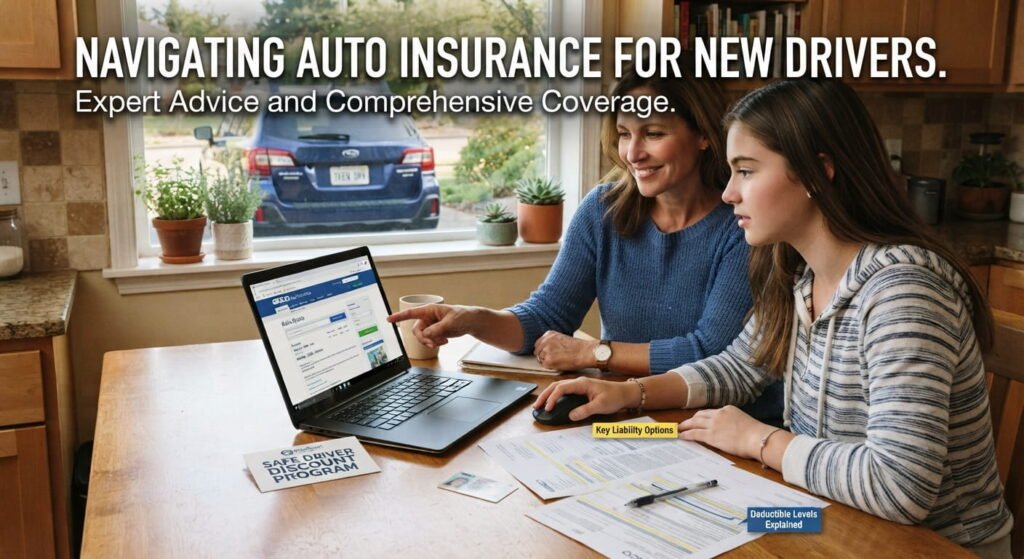
Your teenager has a new license and is ready to drive to school or work. Before handing over the keys, you call your insurer—and discover that adding a new driver could significantly change the family’s premium. It is a common moment to ask whether the teen should join your policy, insure a separate car, or buy a policy of their own.
Teen driver car insurance prices reflect several factors, including age, driving experience, location, the vehicle driven, driving record, and coverage choices. Insurers also differ in how they price households. Adding a teen to a family policy often costs less than a standalone teen policy, but it raises the household’s total bill and is not possible under every set of circumstances.
This guide explains why costs are high, what published 2026 estimates do—and do not—tell you, and how to choose coverage without overlooking financial risks. It also covers discounts, vehicle selection, licensing rules, and a practical way to compare quotes. The goal is not to find one supposedly cheapest company for every teen, but to help your family make an informed choice.
Understanding teen insurance
Why is car insurance more expensive for teen drivers?
Driving experience affects how readily a person recognizes hazards and responds to them. The Insurance Institute for Highway Safety (IIHS) reports that, per mile driven, police-reported crash rates for drivers ages 16–19 are more than four times the rate for drivers 20 and older. Risk is particularly high in the first months after licensing. That population-level finding does not predict how any individual teen will drive, but it helps explain why insurers often charge more for new young drivers.iihs
Insurers estimate the likelihood and potential cost of claims using more than age. A teen’s tickets or at-fault accidents, the car’s repair cost and safety features, annual mileage, and whether the vehicle is used for school or a commute can matter. State and ZIP code also affect pricing, as do liability limits, collision and comprehensive deductibles, and each insurer’s approved rating practices.
The vehicle deserves attention. An expensive or powerful car may bring higher repair or insurance costs than a practical alternative, but no make or model is automatically affordable for every family. Likewise, a clean driving record is valuable without guaranteeing a particular rate. When obtaining quotes, give each company accurate information about the teen, every car they will regularly drive, and the household’s actual vehicle use.
What coverage does a teen driver need?
Start with your state’s insurance requirements and the coverages already on the family policy. Then consider what losses the household could afford. The main building blocks are:
- Bodily injury liability: Helps pay eligible injuries to other people when an insured driver is legally responsible, up to policy limits.
- Property damage liability: Helps pay eligible damage to someone else’s car or property, up to its limit.
- Collision: Helps pay for covered damage to your insured vehicle after a crash, less the applicable deductible.
- Comprehensive: Helps pay for specified non-collision losses, such as theft, hail, fire, vandalism, falling objects, or an animal strike, generally subject to a deductible.
- Uninsured or underinsured motorist coverage: May help with eligible losses caused by a driver who has no insurance or inadequate limits, depending on state law and policy terms.
- Personal injury protection (PIP) or medical payments coverage: May help with eligible medical expenses; requirements and availability vary by state.
A liability limit is the most an applicable coverage can pay toward an eligible claim under its terms. State minimums are legal thresholds, not guarantees that a serious crash will cost less than the policy’s limits. If a teen regularly drives a financed or leased vehicle, its lender or lessor may also require collision and comprehensive, even though states generally do not require those two coverage.
Use this coverage checklist before buying or changing a policy: confirm the teen is properly listed; verify state-required coverages; review bodily injury and property damage limits; check collision and comprehensive for each vehicle; note both deductibles; and read any lender requirements, exclusions, and optional roadside or rental terms. “Full coverage” is an informal label—inspect the actual policy rather than relying on the phrase.
2026 costs and policy choices
How much does teen driver car insurance cost in 2026?
A useful benchmark comes from Insurance.com’s nationwide analysis updated September 18, 2026. Its standalone full-coverage figures use $100,000 bodily injury liability per person, $300,000 per accident, $100,000 property damage liability, and $500 comprehensive and collision deductibles. Its published age averages below describe an individual teen policy—not the amount a family would pay to add a teen.insurance
| Teen driver age | Coverage type | Estimated cost | Important notes |
|---|---|---|---|
| 16 | Standalone full coverage | $10,387/year | National average for the study’s teen policy profile |
| 17 | Standalone full coverage | $8,614/year | Same published coverage category |
| 18 | Standalone full coverage | $7,498/year | Same published coverage category |
| 19 | Standalone full coverage | $5,718/year | Same published coverage category |
| 16 | Standalone state-minimum coverage | $3,302/year | Insurance.com’s separate minimum-coverage estimate; required limits vary by state |
| 16 | Parent-policy full coverage | $6,965–$7,553/year | Published total family-policy averages for teen female and teen male profiles, respectively—not an added charge |
All figures in the table come from Insurance.com’s 2026 teen analyses; its calculator article was updated August 13, 2026. The family-policy range and standalone figures represent different policy arrangements, so do not subtract one from another and treat the result as a guaranteed saving. Insurance.com also reports an average $4,515 annual increase to add a teen to a parent’s full-coverage policy in its calculator analysis; that figure is an incremental cost, not the total family premium, and should not be confused with the family-policy row.
Minimum coverage is cheaper in the cited 16-year-old example partly because it provides different protection. It should not be compared with full coverage as if the two policies had identical liability limits and vehicle coverages. These national estimates cannot predict a quote for your ZIP code, household drivers, car, driving history, or deductibles. Request both the new total household premium and the change from your present premium.
Add a teen or buy a separate policy?
Adding a teen to a parent’s or guardian’s policy is often worth quoting first. It lets the household manage drivers and cars together, may preserve eligibility for multi-car or multi-policy discounts, and simplifies administration. It also generally increases the household premium. Tell the insurer whether the teen has a learner’s permit or license, where they live, which vehicles they use, and whether one car is primarily theirs.
A separate policy may be relevant if the teen owns a car, lives in a different household, or does not meet an insurer’s family-policy rules. But vehicle ownership alone does not establish that a minor can independently enter an insurance contract. Legal capacity, state rules, title or registration, and insurer requirements may call for a parent’s or guardian’s involvement. Ask the insurer how the policy should be structured rather than assuming a newly licensed 16-year-old can simply buy it alone.insurance
Do not leave a regularly driving household teen undisclosed just to keep the bill down. Insurer rules for household-driver disclosure and vehicle assignment vary, and inaccurate information can cause claim or policy problems. Similarly, if a student goes away to school, ask whether they remain covered and whether a student-away discount applies; do not assume their address or driving arrangements no longer matter.
Managing the cost
Best ways to save on teen driver car insurance
The most dependable shopping step is to request quotes from several insurers for the same household, vehicle, liability limits, and deductibles. A lower quote may reflect less protection rather than better pricing. Ask each insurer to show the cost before and after discounts you actually qualify for, and compare the full policy-period price.
- Good student discount: Some insurers recognize qualifying grades or academic standing. Requirements, documentation, and savings vary; ask whether a report card must be submitted again at renewal. State Farm, for example, describes eligibility based on measures such as a 3.0 GPA or class standing, subject to its rules.
- Driver education or training: Ask whether a state-approved course or insurer-specific program qualifies. Completion of a course should not be treated as a guarantee against crashes; IIHS notes mixed evidence for conventional driver education’s effect on crashes per licensed driver.
- Multi-car and bundling discounts: Insuring eligible cars together or combining auto with homeowners or renters coverage may reduce the quoted price. Compare the combined cost, since the largest advertised discount does not necessarily produce the lowest total bill.
- Safe-driving or telematics programs: Some programs use an app or device to assess driving behavior. Ask what data is recorded, who can see it, whether all drivers must participate, and whether future pricing can change.
- Suitable vehicle choice: Check insurance quotes for specific cars before purchasing. Value, repair costs, theft risk, performance, and safety features may all affect the price.
- Deductible choices: A higher collision or comprehensive deductible may lower the premium but increases what the family pays after an eligible claim. Choose an amount you could actually afford.
For cheap car insurance for teenage drivers, revisit quotes at renewal, after a vehicle change, or when a student’s living and driving arrangements change. Discounts are not necessarily automatic or available in every state. Avoid cutting liability limits solely to offset the teen’s higher premium without considering the potential cost of an accident.
How to choose a car for a teen driver
Safety and affordability are both important, but “inexpensive” should not mean choosing the smallest or oldest car available without checking its protection. IIHS advises families to avoid high-horsepower vehicles, seek strong crash-test performance, and look for electronic stability control. Its recommended-vehicle guidance also considers factors such as size and available safety technology.iihs
For insurance, compare a candidate car’s current market value, repair and replacement costs, parts availability, theft exposure, and whether a loan would require collision and comprehensive coverage. A practical vehicle with suitable safety features and manageable repair costs may be a better fit than a high-performance model, but the premium depends on the exact car and family.
Before buying, identify a few candidate vehicles and request insurance estimates for each, using the teen’s actual license status and intended use. Review safety ratings separately from premiums: a low quote does not establish that a car is safe, and a high quote does not prove that a car is unsuitable. Balance both considerations with what your family can afford.
How driving records affect premiums
Tickets, at-fault accidents, and other violations can change a young driver’s premium, though the impact depends on the state, insurer, violation, and prior record. A clean record may help over time but does not guarantee that the bill drops on a particular birthday or renewal. Read updated declarations and renewal documents after any significant change.
Safe habits also matter apart from insurance cost. Follow license restrictions, limit distractions, wear seat belts, and practice hazard recognition together. NHTSA recommends that parents understand their state’s graduated licensing rules, including any night-driving or passenger restrictions, and set clear expectations for phone use. If a teen begins using a different car or driving more often, tell the insurer promptly so the policy reflects actual use.nhtsa
Requirements and shopping
Teen driver insurance requirements by state
Insurance rules are state-specific. Most states require drivers or vehicle owners to maintain a specified level of insurance or other financial responsibility, but minimum liability limits differ. Some states also require or regulate coverages such as PIP or uninsured motorist protection. Your state insurance department is the right starting point for current coverage rules; do not apply an online “national minimum” to your own policy.
Licensing rules are a separate issue. Every state and Washington, D.C., has graduated driver licensing provisions, but permit conditions, supervised practice requirements, nighttime limits, and passenger restrictions vary. A learner’s permit and an unrestricted license therefore do not grant identical driving privileges. Check your state motor vehicle agency’s rules before the teen drives.
Finally, distinguish the law from a loan or lease contract. State law generally does not require collision and comprehensive coverage, while a lender or lessor commonly does. Ask your insurer when it requires a permitted learner to be reported and when a newly licensed driver must be added; follow your state’s rules and the policy’s driver-disclosure requirements.
How to compare teen car insurance quotes
Use a repeatable checklist so the lowest premium does not win simply by offering less protection.
- Record the teen’s permit or license status, driving history, residence, and expected mileage.
- List every vehicle they will regularly use and identify who owns each one.
- Request quotes from multiple insurers for both appropriate family-policy and separate-policy arrangements.
- Match bodily injury and property damage liability limits across quotes.
- Match collision and comprehensive coverage and deductibles for each vehicle.
- Ask about documented good student, training, multi-car, bundling, and telematics eligibility.
- Compare roadside, rental, exclusions, payment fees, and driver-assignment rules.
- Confirm state requirements and any lender conditions, then recheck quotes at renewal.
Ask for the total new household premium, not just a sales estimate of what the teen “adds.” Confirm the effective date before the teen begins driving under a new arrangement, and read the issued declarations page after a change.
Common mistakes families should avoid
Do not select a policy solely because its premium is lowest, or assume legal minimum liability limits are sufficient for every household. Disclose a newly licensed driver and actual vehicle use accurately. Ask about good student and training discounts rather than expecting them to appear automatically.
Get quotes before buying the teen’s car. Keep collision and comprehensive deductibles within your available savings, and check whether a loan or lease requires those coverages. If the teen moves away for school, changes vehicles, or drives less, review the policy instead of assuming existing driver or discount terms still apply. Most importantly, compare quotes with the same limits and deductibles.
Frequently asked questions
How much does car insurance cost for a 16-year-old?
Insurance.com’s September 2026 analysis reports a $10,387 national annual average for its standalone full-coverage 16-year-old profile, with 100/300/100 liability limits and $500 collision and comprehensive deductibles. A family-policy quote is a different arrangement. State, vehicle, insurer, driving record, and household details can change either price substantially.insurance
Is it cheaper to add a teenager to a parent’s car insurance?
Often, but compare actual quotes. A teen on a family policy may benefit from its structure and eligible household discounts, while a standalone policy for a young driver can be costly or difficult for a minor to obtain independently. Ask for both the resulting total family premium and any eligible separate-policy price.
What discounts are available for teen drivers?
Ask about qualifying good-student grades, approved driver training, insurer-specific young-driver programs, and eligible telematics. The household may also qualify for multi-car or home-and-auto bundling savings. Requirements, documentation, data-sharing rules, and actual savings vary by insurer and state; confirm each discount on the written quote.
Does a teen driver need full coverage?
Not simply because they are a teen. State rules determine required coverages, while a lender or lessor may require collision and comprehensive on a financed or leased car. For an owned vehicle, compare its value and repair costs with the added premium, deductibles, and your ability to replace it.
Does car insurance get cheaper at age 18 or 19?
Published teen averages tend to decline with age, but a particular driver’s premium will not necessarily fall on a birthday. Experience, claims, tickets, location, vehicle, coverage, and insurer pricing all matter. Request fresh quotes at renewal rather than assuming your current company will automatically become the lowest-priced choice.
Can a teenager have their own car insurance policy?
Possibly, depending on age, state law, legal capacity, vehicle ownership, and insurer requirements. A minor may need a parent or guardian involved rather than being able to enter a policy contract independently. Ask the insurer how to insure a teen-owned vehicle and disclose the drivers and household accurately.insurance
What is the cheapest way to insure a new teen driver?
Compare family-policy and eligible separate-policy quotes, shop several companies, and obtain prices for a suitable vehicle before buying it. Ask about verified discounts and test deductibles you could afford after a claim. “Cheapest” should refer to comparable coverage; reducing important liability protection can create a much larger financial risk.
Conclusion
Teen driver car insurance costs reflect age and experience, but the vehicle, location, household arrangement, driving record, and coverage choices matter too. Compare personalized quotes, look beyond state-minimum liability limits, and check which discounts your family actually qualifies for. A car that balances safety, practicality, and insurability can also make the choice easier.
Review the policy with your teen so everyone understands who is insured, which cars they may drive, and what deductibles apply. Follow your state’s licensing restrictions and revisit the policy as driving habits change. Before choosing, gather your vehicle and driver details, verify local requirements, and request comparable quotes from multiple insurers.