What Does Car Insurance Not Cover? Common Exclusions (2026)

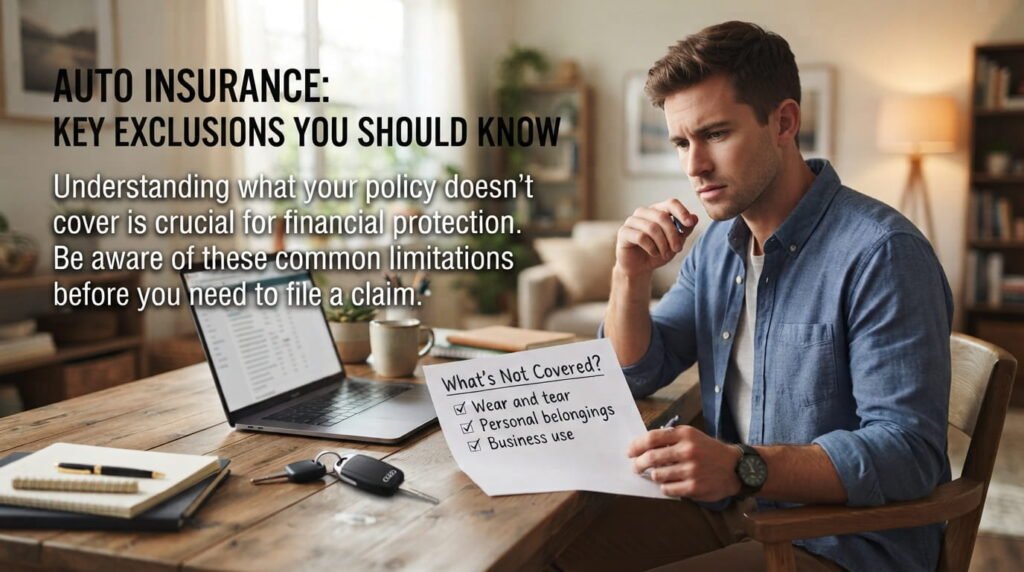
You may have paid for auto insurance for years without needing to file a claim. Then your engine fails, a laptop disappears from your parked car, or an accident happens during a delivery shift. It is natural to ask: what does car insurance not cover?
An auto policy protects against particular risks, not every expense connected to owning or driving a car. Its answer depends on the coverage you bought, the cause of the loss, who was driving, your policy’s exclusions and conditions, and applicable state law. Collision and comprehensive, for example, address different causes of vehicle damage; neither automatically pays for ordinary repairs or belongings left inside the car.
Understanding those differences before a loss can help you choose useful optional protection and avoid surprise bills. This guide explains common gaps, why a claim may be denied or only partly paid, and what to do if you disagree with an insurer’s decision. Because policy wording varies, treat these as common patterns—not a substitute for your own declarations page and contract.
How exclusions work
Coverage is more than a policy name
An insuring agreement states what a particular coverage promises to pay for when its requirements are met. Exclusions remove specified people, property, activities, or causes of loss from that promise. Conditions describe obligations such as providing accurate information and cooperating with a claim investigation. An endorsement changes the original contract by adding, removing, or modifying terms.
Your declarations page lists the vehicles, coverages, limits, deductibles, drivers or driver statuses, and policy period. A limit caps what an applicable coverage may pay. A deductible is the share of an eligible vehicle-damage claim generally assigned to you. Neither is necessarily an exclusion: an insurer might accept a claim but pay only part of the bill because a limit or deductible applies.
Each coverage has a different job. Liability addresses eligible injuries and property damage you cause to others. Collision addresses covered crash damage to your insured vehicle; comprehensive addresses specified non-collision events. Medical payments or personal injury protection can address eligible medical costs, while uninsured motorist coverage applies under its own rules. Simply having an auto policy—or one described as “full coverage”—does not mean you bought every one of these protections.
Read the applicable coverage section and its exclusions, limits, conditions, and endorsements. Ask your insurer about an unclear situation in writing, especially if you use your vehicle for work or let others drive it.
Common coverage gaps
What does car insurance not cover? Common examples
The table is a starting checklist. “Generally not covered” means under a standard personal auto policy in the circumstances described; a covered event, endorsement, separate product, or state rule can change the answer.
| Loss or situation | Typical coverage status | Possible alternative or question to ask |
|---|---|---|
| Oil changes, worn brakes, aging tires | Generally not covered as routine maintenance or wear | Budget for upkeep; check a manufacturer warranty or service contract for its specific terms. |
| Engine or electrical failure without an insured event | Generally not covered by collision or comprehensive | Ask about an eligible warranty, mechanical breakdown product, or service contract. progressive |
| Laptop or bag stolen from inside the car | Generally not covered by auto comprehensive | Check homeowners or renters personal property coverage and its deductible. |
| Paid delivery or rideshare use | A personal policy may restrict or exclude applicable losses | Ask about a rideshare endorsement or suitable commercial coverage before working. |
| Damage deliberately caused by an insured | Generally excluded | Do not confuse this with vandalism committed by someone else, which comprehensive may cover. |
| Organized racing or track activity | May be excluded under policy wording | Ask for written confirmation of coverage before an event. progressive |
| Driving by a named excluded person | Coverage may be unavailable or restricted, subject to state rules | Review the driver’s status and any signed exclusion. progressive |
| Loss greater than a policy limit | The amount beyond the applicable limit generally is not paid by that coverage | Review limits before a loss; consider suitable higher limits when buying. naic |
Routine maintenance and wear. Auto insurance is not a maintenance budget. Ordinary oil changes, brake wear, tire replacement, scheduled servicing, and gradual deterioration are generally your responsibility. A mechanical problem that simply develops with age does not become an insured loss because repairing it is expensive.
Mechanical or electrical breakdowns. A transmission failure, deteriorating EV battery, or failed electrical component usually is not covered by standard collision or comprehensive when it occurs without a covered event. Cause matters: if a covered collision demonstrably damages an engine or battery, the resulting damage may be assessed under the applicable coverage. Ask the claims representative how the damage was determined to have occurred.
Belongings in the car. Comprehensive coverage may pay for covered break-in damage to the vehicle, but it usually does not replace stolen clothing, luggage, or a laptop. A homeowners or renters policy may cover eligible stolen belongings away from home, subject to its own deductible, limits, and exclusions. Report the car damage and missing property separately to the appropriate insurers.
Business use and delivery. Using a personal car for paid rides, food delivery, or other commercial work can create a coverage gap. A personal auto policy may exclude or limit losses during particular work activities; coverage can also differ between waiting for an app request, traveling to a pickup, and carrying a customer or delivery. Ask the insurer about a suitable endorsement or commercial policy before starting work.
Intentional damage and false claims. Insurance is intended for eligible losses, not damage an insured deliberately creates. Knowingly false information or fabricated claim evidence can also have legal and policy consequences. By contrast, someone else’s vandalism to your car may be covered by comprehensive if you purchased it. The word “intentional” alone does not tell you who caused the damage.
Racing and track events. An ordinary street policy may exclude racing, speed contests, or track-related activity. Do not assume a “noncompetitive” event is covered merely because it does not award a prize; wording can address the location or nature of the event. Ask your insurer about the proposed activity and get its answer before participating.progressive
Excluded versus unlisted drivers. A named excluded driver is expressly designated as not insured to drive a listed vehicle, where state law permits that arrangement. An unlisted friend who occasionally borrows your car with permission is not automatically the same thing: permissive-use provisions may apply. Regular household drivers and drivers who should have been disclosed present different questions. Confirm each person’s status rather than assuming either universal coverage or universal exclusion.
Extraordinary-event exclusions. Some policy forms contain provisions addressing war, nuclear events, or other unusual causes of loss. Their presence and effect depend on the contract and applicable law; there is no value in assuming a generic online exclusion appears word-for-word in yours. Ask for the applicable provision if an extraordinary circumstance concerns you.
Amounts beyond limits. A $50,000 property damage liability limit, for instance, does not promise payment for $80,000 of eligible damage. In that illustrative situation, the policy limit could leave a $30,000 difference you may be responsible for, depending on the claim and law. A deductible or expense outside the insuring agreement is another way a covered incident can still cost you money.
Limits of collision and comprehensive
Collision generally responds to eligible physical damage to your insured car when it strikes another vehicle or object. Comprehensive generally responds to eligible non-collision causes, potentially including theft, fire, hail, flood, vandalism, falling objects, and an animal strike. The precise event and policy wording determine which coverage applies.
Neither coverage automatically turns a maintenance problem into a claim. Suppose a car stops running because its engine wore out: buying both collision and comprehensive generally does not pay for a new engine. If a fallen tree branch damages that engine, however, the insurer may examine whether the tree impact is an eligible comprehensive loss. The distinction is what caused the damage, not how expensive the repair is.
These coverages also generally do not insure a laptop on the back seat. They usually have separate deductibles, and a total-loss payment can be based on the vehicle’s pre-loss value rather than what you owe on a loan. Optional rental reimbursement is not automatically included merely because collision is present.
Flooding illustrates another important distinction: comprehensive may cover eligible sudden flood damage to the car, while gradual moisture or a maintenance-related leak may be treated differently. Do not apply homeowners flood-insurance rules to your vehicle; inspect your auto policy’s comprehensive terms.allstate
Does a policy cover rental cars?
That depends on the policy, the rental, and the loss—not simply on whether you have “full coverage.” A personal auto policy may extend certain coverages to an eligible rental car under specified circumstances. A rental company’s damage waiver can reduce your contractual responsibility for damage to its vehicle, but is generally not a substitute for liability insurance. Credit-card rental benefits often focus on vehicle damage or theft and have their own eligibility rules.
Before renting, ask your auto insurer what limits and deductibles would apply. Check the rental agreement and the exact credit-card benefits guide for eligible vehicles, rental duration, driver requirements, and whether the benefit is primary or secondary. Do not assume a rental payment or roadside bill is covered by your standard auto policy.
Denials and possible solutions
Why a car insurance claim may be denied
A denial is not always an “exclusion.” Sometimes the claim concerns a coverage the policyholder never bought. For example, liability-only insurance generally cannot pay to repair your own car after an at-fault collision. A policy might also be inactive on the date of the accident, or the loss may fall outside an applicable driver, vehicle, or use provision.
Other potential issues include incorrect or incomplete application information, deliberate damage, or suspected fraud. An insurer may also dispute the cause or amount of damage. Exceeding a limit, however, often means a claim is paid only up to that limit—not that every portion of the claim is rejected. Likewise, the deductible normally reduces an eligible vehicle-damage payment rather than making the incident uncovered.
Whether a decision is justified depends on the actual facts, policy wording, and state law. If you receive a denial, ask the insurer to identify the precise reason and policy provision in writing. A general statement that “this is not covered” is not as useful as an explanation of which coverage was considered and why it did not apply. State insurance departments can provide complaint guidance if you cannot resolve a concern with the company.
Additional protection that may help
Some gaps can be addressed before a loss, but no combination of products removes every exclusion. Price a benefit against its eligibility rules and what you could pay yourself:
- Mechanical breakdown insurance or a vehicle service contract: May address specified non-accident failures. These are different products from collision or comprehensive; exclusions, vehicle-age limits, deductibles, and covered parts differ.
- Rideshare endorsement or commercial auto coverage: May address eligible work-related driving that a personal policy does not. Describe the exact delivery or rideshare activity when requesting coverage.iii
- Rental reimbursement: May help with a temporary car after a qualifying covered loss, up to daily or total limits; it generally is not a substitute for roadside help after an ordinary breakdown.
- Roadside assistance: May provide eligible towing, tire, lockout, or other specified services. It does not itself insure the underlying repair.
- Gap or loan/lease payoff protection: May help with an eligible difference between a totaled car’s value and what remains on its loan or lease, subject to product limits.
- Homeowners or renters personal property coverage: May help with eligible belongings stolen from the vehicle, subject to its own terms and deductible.
- Custom equipment coverage: Where offered, may address eligible aftermarket parts or modifications beyond what a standard policy includes. Disclose upgrades and ask how they would be valued.progressive
Ask for the additional premium and the actual endorsement or contract. A label such as “vehicle protection” tells you less than its covered-event list, exclusions, and claim limits.
Reviewing your policy
How to avoid unexpected gaps
You cannot prevent every disputed claim, but you can make your coverage choices clearer before one occurs:
- Read the declarations page. Confirm vehicles, drivers, effective dates, limits, and collision and comprehensive deductibles.
- Review exclusions and conditions. Focus on situations relevant to your driving and any regular access others have to your car.
- Disclose business use. Explain delivery, rideshare, or other paid driving accurately.
- Ask about drivers. Distinguish occasional permitted borrowing from regular household use and any named exclusion.
- Price useful endorsements. Check rental, roadside, gap, custom equipment, or work-related options without assuming they are included.
- Keep details current. Update the insurer after a move, vehicle change, new household driver, or significant change in use.
- Get clarification in writing. Describe the specific scenario rather than asking whether you have “full coverage.”
- Document and report losses promptly. Preserve photos, witness information, repair estimates, receipts, and communications under your policy’s claim instructions.
When comparing quotes, match limits and deductibles. A cheaper policy may simply leave more risk with you. Ask how a proposed change affects both the premium and what you might owe after an accident.naic
What to do after a denial
Request the denial reason and relevant policy provisions in writing. Review the declarations page, the coverage section, exclusions, conditions, and any endorsements cited. Ask which facts or records the adjuster relied on and whether the insurer has a process for reconsidering its decision.
Gather photographs, repair estimates, receipts, police information, and relevant statements. If you believe the insurer misunderstood the cause of damage or overlooked an endorsement, explain specifically and provide supporting evidence. Keep copies of letters and a timeline of contacts. Read any settlement or release before signing.naic
If the issue remains unresolved, contact your state insurance department about consumer guidance or a complaint. For a substantial loss or complex liability dispute, consider qualified legal advice about your options and any applicable deadlines. Neither an internal review nor a regulator complaint guarantees that a denial will be reversed.
Frequently asked questions
What does car insurance usually not cover?
Standard personal auto insurance generally does not pay for routine maintenance, ordinary wear, or a breakdown unrelated to a covered event. It also does not automatically cover belongings in the car or paid commercial driving. The exact answer depends on the coverage bought, policy exclusions, endorsements, facts, and state law.
Does car insurance cover engine failure?
Usually not when an engine fails from age, wear, or an ordinary mechanical defect. If a covered collision or comprehensive event causes engine damage, an insurer may assess it under the applicable coverage. A manufacturer warranty, mechanical breakdown product, or service contract has different terms and may be relevant to non-accident failures.
Does car insurance cover items stolen from my car?
Auto comprehensive coverage may address eligible damage to the car during a break-in, but generally does not replace a stolen laptop, bag, or clothing. Homeowners or renters personal property coverage may apply to eligible belongings away from home, subject to its own deductible, limits, and exclusions. Check both policies.
Will insurance cover an accident while delivering food?
Do not assume a standard personal auto policy will. Paid delivery is a commercial activity that may be restricted or excluded, depending on the insurer, policy, state, and stage of the job. Tell your insurer exactly how you work and ask whether an endorsement or commercial policy is needed before taking deliveries.
Can a claim be denied if another person drives my car?
Possibly, but an unlisted driver is not automatically an excluded driver. Occasional permissive use may be covered; an expressly excluded driver, regular household driver, or unauthorized use can raise different questions. Review the driver status, your policy’s permission and disclosure terms, and state rules with the insurer.
Does full coverage car insurance cover everything?
No. “Full coverage” is an informal phrase commonly referring to liability, collision, and comprehensive coverage. Deductibles, limits, conditions, and exclusions still apply, and benefits such as rental reimbursement or roadside assistance are not automatically included. Read the specific coverage list and contract rather than relying on the phrase.
Does comprehensive insurance cover flood damage?
It generally can cover eligible sudden flood damage to your insured vehicle, subject to the policy and deductible. That differs from gradual moisture, a maintenance problem, or water entering through a window left open, which may not qualify. Ask how the insurer distinguishes the cause of the water damage.allstate
What should I do if my claim is denied?
Ask for the reason and policy provision in writing. Compare the decision with your declarations page and the evidence, then provide photographs, estimates, or other records the insurer may have missed. Request reconsideration through its process. Your state insurance department can explain complaint options; substantial disputes may warrant legal advice.
Conclusion
What does car insurance not cover? Often, it is a loss outside the coverage you bought: ordinary maintenance, an unrelated breakdown, belongings inside the car, or certain business uses. Other losses may be covered only partly because of a deductible, limit, or settlement rule. And even common exclusions can have exceptions under particular policy wording, endorsements, facts, or state law.
Review your declarations page and policy contract before you need them. Confirm who may drive the car, discuss work-related use, and price optional protection for gaps that matter to you. If a situation is unclear, describe it to your insurer and ask for a written explanation.